The Webcam Is the Boss: Stress-Testing Talking-Head APIs in 2026
The demo is not the job
Talking-head APIs are usually sold on a clean close-up: even light, a lav mic, a neutral accent, and a face that never turns too far from the camera. That is not the job most teams are hiring for. The job is a product manager recording onboarding copy on a MacBook webcam, a creator dubbing a short from a hotel room, or a support team turning a script into a training avatar without booking a studio.
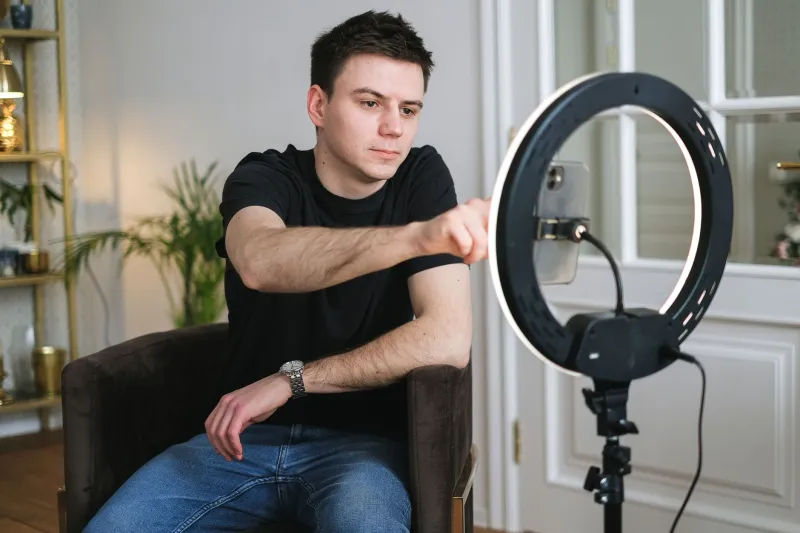
So we built a small field test. We collected 18 short clips from six US creators and recorded matching audio prompts. The accents were deliberately varied: a Texas drawl, clipped Brooklyn speech, flat Upper Midwest, Atlanta, Boston, and California. Lighting ranged from window backlight to overhead kitchen cans to a single ring light. Capture ranged from a recent MacBook webcam to a Windows laptop camera to a phone front camera routed through a video call. Audio came from lav mics, earbuds, and laptop mics. We then pushed the same clips through five talking-head and lip-sync APIs in November 2026 and scored what came back.
We are not publishing creator faces. We are publishing the harness, the scoring rubric, and a synthetic stand-in set so other teams can reproduce the method without borrowing someone else's likeness.
How we scored
We weighted four things, because those are the four things that decide whether a feature ships.
- Sync accuracy: Did the mouth land on the right phoneme, or did it drift during fast speech? We reviewed frame by frame and flagged visible offset at sentence starts, plosives, and pauses.
- Artifact behavior: Teeth, beards, glasses, collars, earrings, background edges. We cared less about one ugly frame than about whether the failure was predictable and fixable.
- Latency: p50 and p95 from upload to playable file, not the vendor's demo latency.
- Cost: Listed price per finished minute, plus the retry tax. If a clip failed and had to be regenerated twice, that is part of the real cost.
For social dubbing we weighted sync and artifacts at 40% each, with latency and cost at 10% each. For avatar onboarding we would shift more weight to latency and artifact stability. Your mileage will depend on whether a bad frame is a retry or a reputation problem.
What broke first
Accents were not equal. One API smoothed Southern vowels into something closer to General American, which looked fine until the creator said it did not sound like her. Another clipped Brooklyn consonants and made fast speech look like a ventriloquist act. The best overall sync model handled Boston non-rhotic speech better than the rest, but it was also the slowest and most expensive in our run.
Lighting caused more failures than accent. Backlight produced halos and a floating jaw on two APIs. Low-light webcam noise made mouths smear during longer vowels. Mixed lighting — window on one side, warm lamp on the other — was the hardest case, because the model had to decide which shadow belonged to the face and which belonged to the room.
Bad webcams added a second problem: motion blur and rolling shutter made sync look worse than it was. APIs that smoothed or interpolated frames handled this better. APIs that tried to preserve every source frame preserved the blur too. Beards crawled. Teeth turned into a picket fence. Glasses glinted at the wrong moment. Plosive sounds like p and b sometimes froze the lower face for a frame or two.
The lesson: the model is not the only culprit. Pre-processing, face detection, and audio normalization do a lot of the visible work. A clean transcript and a stable face box can beat a better model fed a messy input.
The scoreboard
Scores are relative to this test set, not universal grades. Treat them as a smoke signal, then run your own clips.
| API | Sync | Artifacts | p95 latency | List cost per finished minute | Best for |
|---|---|---|---|---|---|
| A | 4.4 | 3.1 | 18s | $4.20 | Clean studio footage, General American |
| B | 4.0 | 4.2 | 11s | $2.80 | Fast social dubbing, beard-friendly |
| C | 4.6 | 3.8 | 26s | $6.50 | Wider accent range, higher budget |
| D | 3.7 | 4.5 | 8s | $1.90 | High-volume, low-stakes clips |
| E | 4.2 | 4.0 | 15s | $3.60 | Teams that need workflow and audit hooks |
API C had the best sync on our accent set, but the p95 latency made it a poor fit for a live-ish editor. API B was the best compromise for social teams: fast, stable artifacts, and cheaper than C. API D was the cheapest and quickest, but it failed more often on glasses and backlight. API E was not the best at any one thing, but it had the most predictable output and the clearest admin controls.
The decision matrix we would use
| If you are shipping | Start with | Why | Watch out for |
|---|---|---|---|
| Social dubbing for US creators | B or D | Fast turnaround, lower cost per minute | Accent drift; review before publishing |
| Executive avatar or premium comms | C | Best sync across our accent set | Budget for p95 latency and retries |
| High-volume UGC tool | D | Cheap and fast at scale | Cap clip length; add human review |
| Regulated training or internal comms | E | Predictable output and admin controls | Confirm data retention and provenance behavior |
| Onboarding avatar for real customers | B, then test C | B is faster; C may fit harder accents | Do not ship without a regional accent test set |
The stuff vendors do not put on the pricing page
Ask about retry cost, queue latency, concurrency limits, output resolution, data retention, and whether the API adds or strips metadata. Text-driven lip-sync APIs also need a transcript, and accent transcription errors cascade into mouth errors. A model that sounds right on a demo script can fall apart on names, numbers, and code-switching.
We would also test the failure mode. Does the API return a usable file with a weird jaw, or does it fail cleanly? Can you re-run one segment without regenerating the whole clip? Does the output carry a watermark or a provenance manifest? That last question matters more once the file leaves your app.
What we would ship
Before generation, run a pre-flight check: audio loudness, face box, head angle, and lighting. After generation, show a simple confidence flag instead of pretending every clip is perfect. Give editors a segment-level retry. Keep a small library of real test clips from your own users, with consent, and re-run them when a vendor updates a model.
The webcam is the boss. Pick the API that fails gracefully when the boss is having a bad day.